
September 5, 2026
Florida Room, Lanai or Screen Enclosure: What the Words Actually Mean
Two of those three words are defined in the Florida Building Code. One isn't. What the code's Category I–V sunroom ladder decides about your project.
By Pool Pros (CPC1461047) · September 5, 2026 · Pool Features
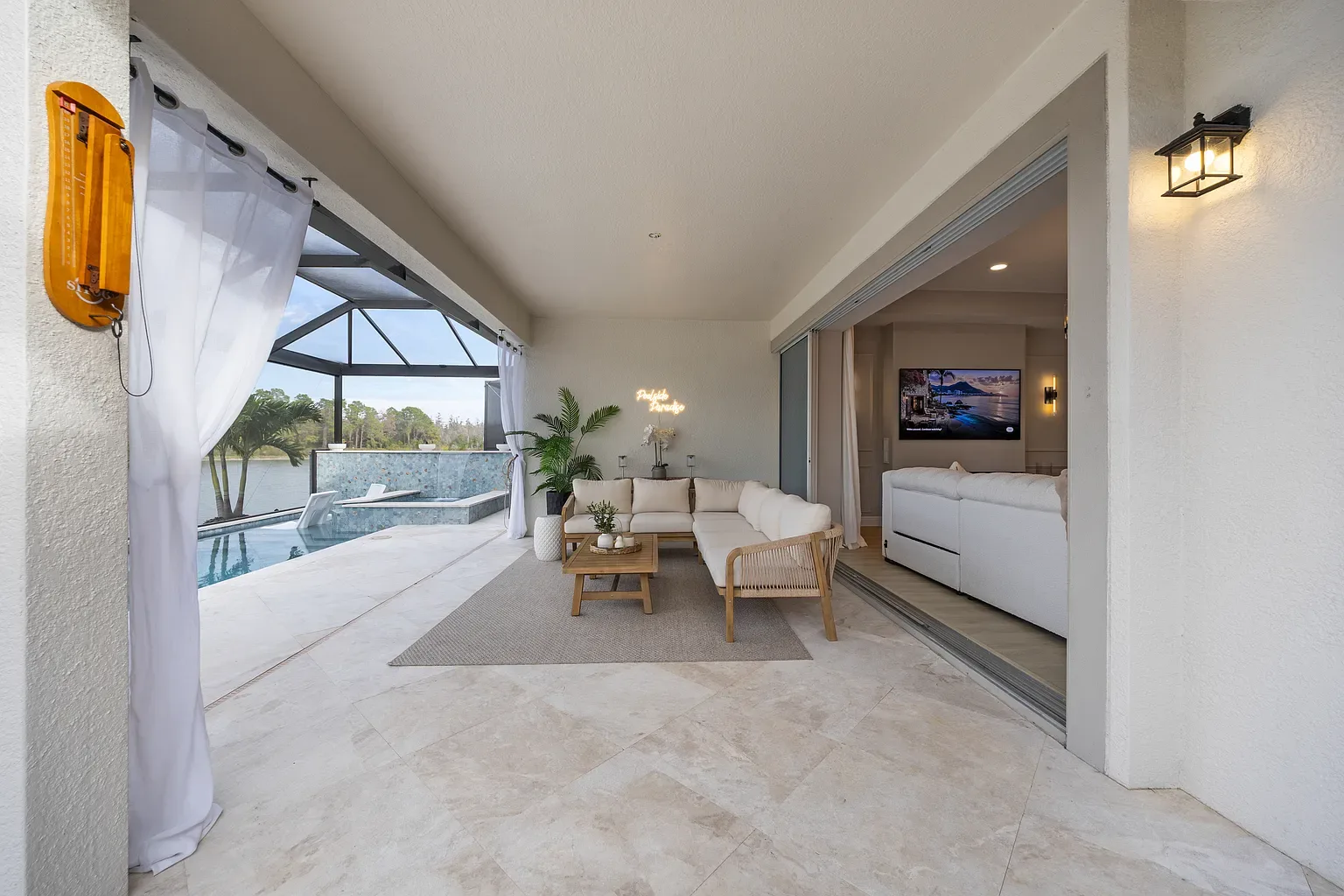
Three contractors come to look at the same backyard. One quotes a lanai, one quotes a Florida room, one quotes a screen enclosure. The prices are wildly different and none of the quotes describe the same structure.
This is not usually anyone being slippery. It is a vocabulary problem with money attached.
Only two of those words are real
Here is the thing nobody tells homeowners: the Florida Building Code defines screen enclosure and it defines sunroom. It does not define lanai and it does not define Florida room.
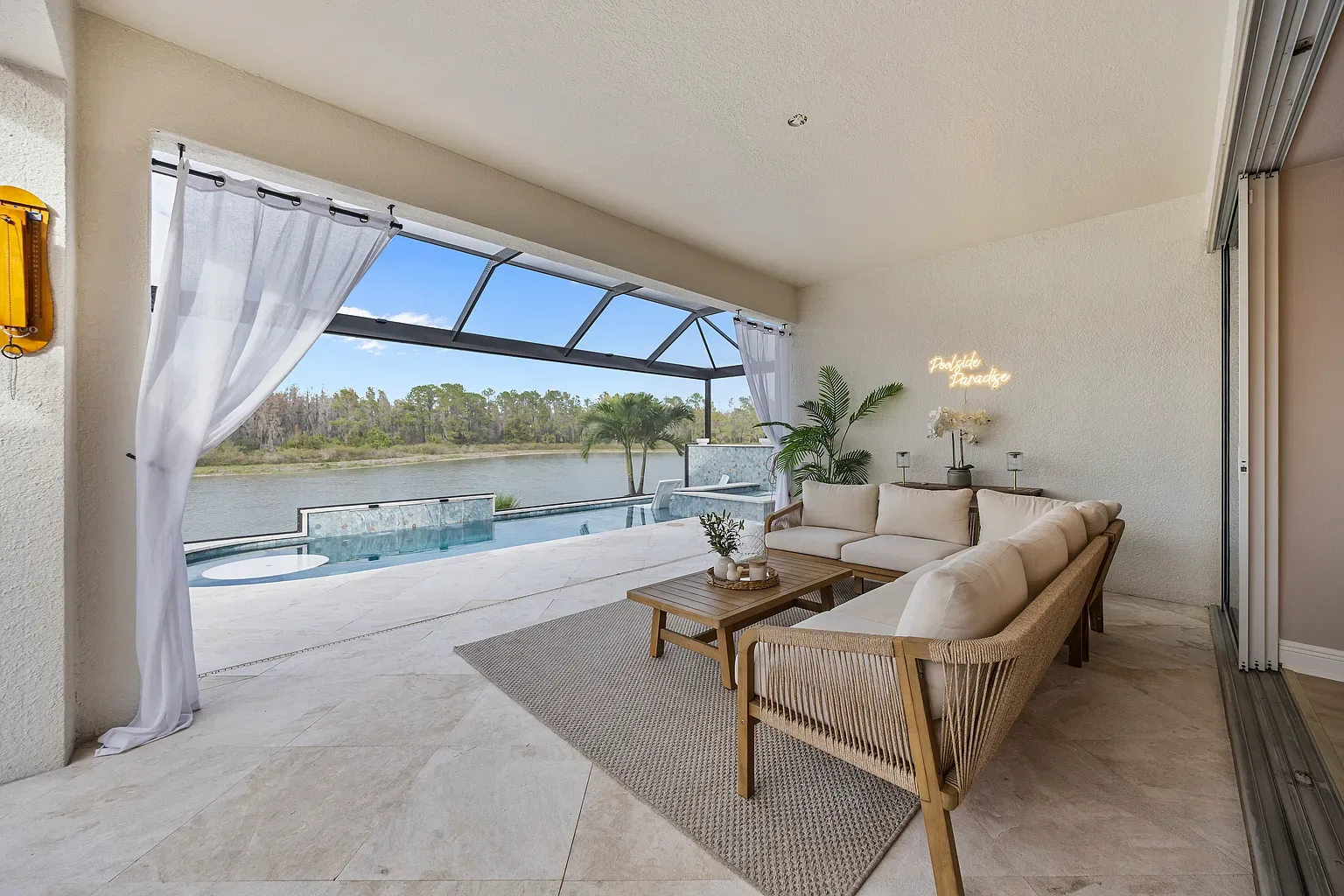
Those two are everyday words. “Lanai” is Hawaiian, arrived in Florida through mid-century real-estate marketing, and now means whatever the person saying it pictures — usually a covered, screened space off the back of the house. “Florida room” is similar and just as elastic; ask five people and you will get five structures, some glazed, some screened, some conditioned, some not.
There is nothing wrong with using those words in conversation. The problem starts when they appear on a quote, because they do not tell you what is being built, what it has to comply with, or what it will do for you.
What the code actually recognises
A screen enclosure is, in the code’s terms, a structure whose walls and roof are screen — an enclosure of insect screening, with or without removable vinyl or acrylic wind break panels, and a roof of screening or similar lightweight material.
A sunroom has a definition broad enough to surprise people. The code’s sunroom definition expressly includes conservatories, sunspaces, solariums, and porch or patio covers or enclosures — several of the things homeowners assume are separate categories are all sunrooms as far as the code is concerned. Sunrooms must comply with the AAMA/NPEA/NSA 2100 standard.
So the first useful reframe: your “Florida room” is almost certainly a sunroom in code terms, and the only real question is which kind.
The ladder that actually decides things
The code sorts sunrooms into five categories, and the two variables that matter are whether the space is habitable and whether it is conditioned.
- Category I — thermally isolated, walls open or enclosed with insect screening or thin plastic film. Nonhabitable, unconditioned.
- Category II — thermally isolated, walls enclosed with translucent or transparent plastic or glass. Nonhabitable, unconditioned.
- Category III — as Category II, but the fenestration must additionally meet requirements for air infiltration resistance and water penetration resistance.
- Category IV — thermally isolated from the main house, with its own temperature control and added performance requirements. Nonhabitable but conditioned.
- Category V — open to the main structure with integrated heating and cooling, meeting infiltration and thermal performance standards. Habitable and conditioned.
And the line that resolves most arguments: screen enclosures and sunroom Categories I, II and III are not considered habitable space under the Florida Building Code.
That single fact explains a great deal. It is why a screened pool cage does not add to your home’s living area. It is why the energy code bites on some of these structures and not others. It is why Category I and Category V cost such different amounts despite occupying the same footprint on the same slab.
What this means for a pool project
Three practical consequences, in the order they arrive.
1. Decide the category before anyone engineers anything. Hillsborough County’s own checklist for residential screen enclosures and glass room additions requires plans designed to the current Florida Building Code, digitally signed and sealed by a Florida-registered architect or engineer, with the Risk Category identified. The engineering follows the category. Changing your mind afterwards means re-engineering, not just re-pricing.
2. Settle the barrier question at the same time. If the enclosure is going to serve as your pool safety barrier, it has to meet the barrier requirements as well as everything else — height, nothing climbable, no opening passing a 4-inch sphere, and doors that open outward, self-close and self-latch with the release on the pool side. A structure specified only for insects will not automatically qualify. This is covered in detail in Florida’s pool barrier law.
3. Be clear with yourself about what you want it to do. If you want shade and no mosquitoes over a pool deck, you want a screen enclosure or a Category I sunroom, and the cost is modest. If you want a room you can sit in during a July afternoon with the air on, you want Category IV or V, which is a substantially different building. Both are legitimate. Buying the first while expecting the second is where disappointment comes from.
How to compare three quotes properly
Stop using the words. Ask each contractor exactly two questions:
- “Which code category is this — screen enclosure, or sunroom Category I, II, III, IV or V?”
- “Is this structure also serving as the pool safety barrier, and is it specified to meet the barrier requirements?”
Any competent enclosure contractor can answer both in a sentence. The answers will usually explain the entire price spread, and they turn three incomparable quotes into three comparable ones.
That is the whole trick. The words are the problem; the categories are the answer.
Code references reflect the Florida Building Code as published on 17 August 2026 and are re-verified quarterly. Your county building department is the authority for your address and may apply local amendments.

References
Sources cited in this article:
- Florida Building Code, Building — Chapter 20 (Aluminum), §2002.6 sunroom categories and §2002.7 screen enclosures (retrieved 17 August 2026)
- Hillsborough County — Residential Screen Enclosure & Glass Room Additions permit checklist (retrieved 17 August 2026)
- Florida Building Code, Residential (2023, 8th ed.), Chapter 45 — Private Swimming Pools (retrieved 17 August 2026)
Ready to talk about your own pool?
Tell us about the space you have and the pool you're picturing — we'll take it from there.