
April 22, 2026
Concrete vs. Fiberglass Pools: An Honest Comparison from a Builder Who's Maintained Both
A concrete pool builder who spent years maintaining both concrete and fiberglass pools compares installation, water chemistry, durability, and value.
By Mark Christiansen · April 22, 2026 · Builder Insight
If you’ve spent any time researching pools online, you’ve probably seen a strong push toward fiberglass: lower maintenance, a smoother surface, fewer chemicals, faster installation. And to be fair, fiberglass pools do have their place. But after years of owning and operating a pool maintenance company — long before becoming a concrete pool builder — my perspective is shaped by hands-on experience servicing both types, week after week, year after year. Here’s an honest breakdown of how concrete and fiberglass pools really compare in the real world.
Installation & Customization
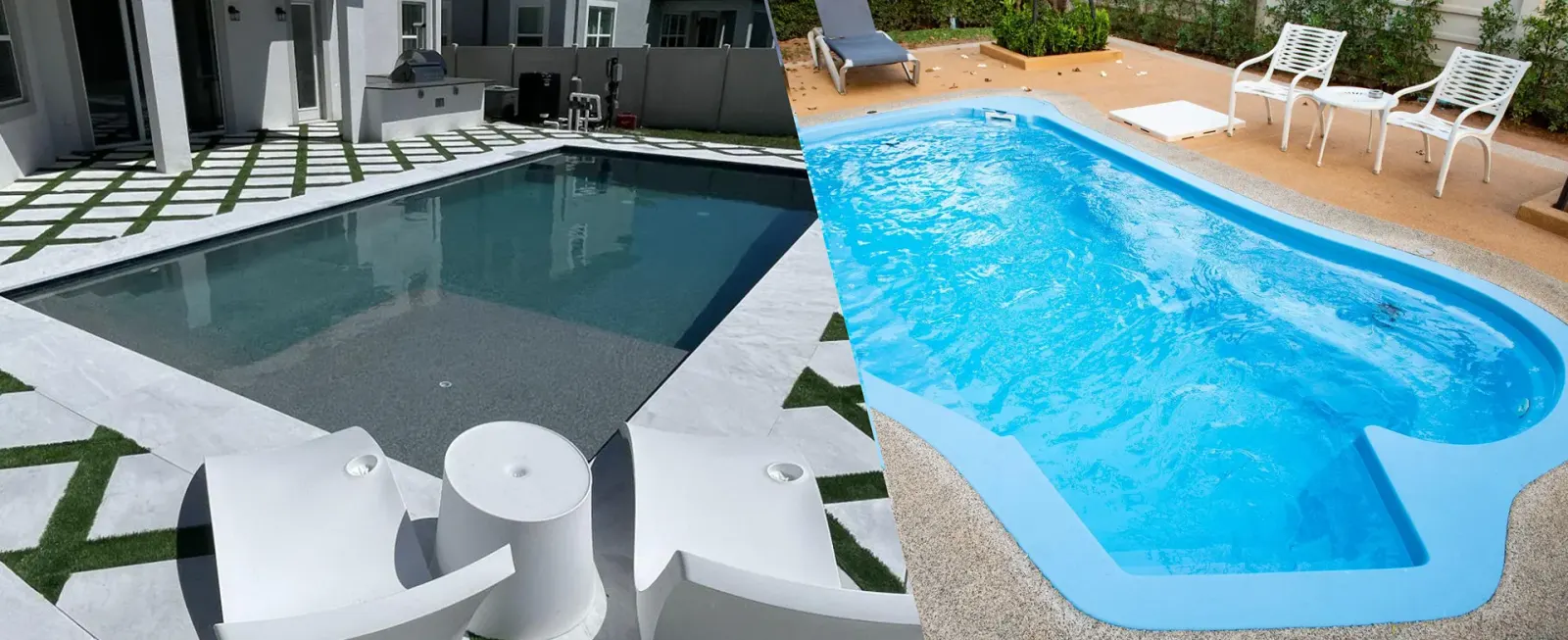
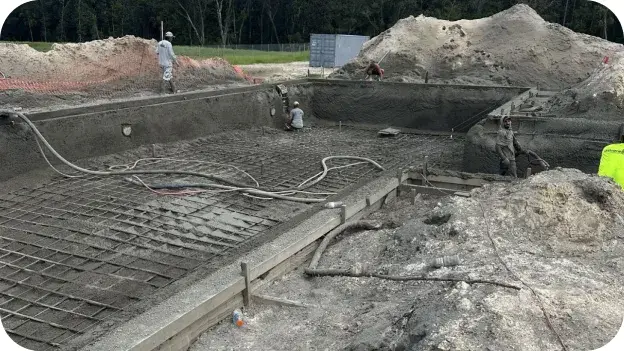
Concrete (gunite/shotcrete) pools are built on-site and fully customizable — completely custom shapes and sizes, unlimited depth options, and integrated spas, sun shelves, and vanishing edges. If you can imagine it, it can be engineered and built, which is why most high-end homes use concrete. The consideration: concrete pools require proper curing and startup chemistry management, especially in the first 30 days.
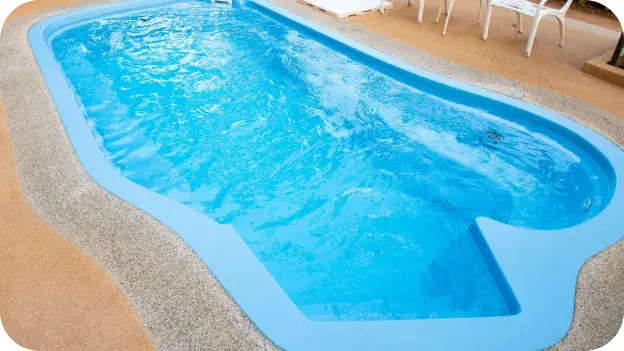
Fiberglass pools install faster from a factory-formed shell with a smooth gelcoat surface, and carry fewer short-term plaster curing concerns. The limitation is that they’re restricted to pre-manufactured shapes and sizes, with less flexibility for custom features — often a more “cookie-cutter” look. For homeowners wanting speed and simplicity, fiberglass can be appealing, but customization is limited to what fits on a truck.
Water Chemistry & Maintenance
This is where real-world maintenance experience heavily shapes the comparison. The common industry narrative says concrete pools raise pH, fiberglass pools are easier to maintain, and fiberglass requires fewer chemicals.
In the field, it played out differently: concrete pools do naturally drive pH upward, especially early on, requiring periodic acid additions. But in the fiberglass pools we maintained, pH and alkalinity often ran very low, we consistently added more chemicals overall, and the cost and frequency of pH and alkalinity increasers outweighed the acid used in concrete pools. In many cases, fiberglass pools required more balancing intervention, not less. Some of those pools may have had aging gelcoat or improper prior maintenance — but even after recoating, we often saw persistent water balance instability. Eventually, our maintenance company stopped servicing fiberglass pools altogether because of the ongoing issues and callbacks.
Surface & Aesthetic Performance
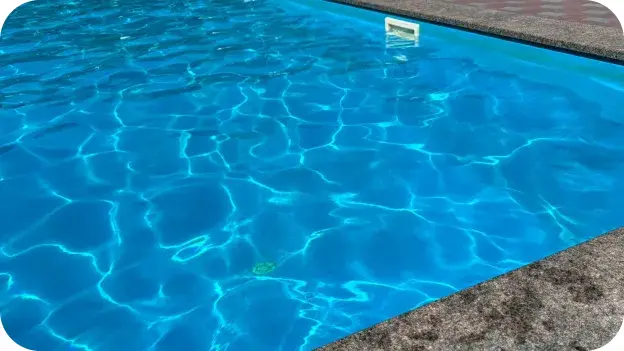
Fiberglass pools often show dirt and debris much faster — their glossy finish tends to highlight sand, leaf debris, or fine particulate. Concrete pools, especially with modern interior finishes, tend to hide minor debris better and hold a richer, more premium look.
With fiberglass, if algae gets established and the gelcoat is aging or fading, staining can occur, and light surface scratching from nets or debris removal isn’t uncommon; over time, some fiberglass pools develop a dull or chalky appearance. With concrete, the surface is more robust — algae can be brushed more aggressively without scratching a gelcoat, and interior finishes can be resurfaced and modernized down the road.
Shedding & Filtration Issues
One issue we frequently encountered with fiberglass pools was what appeared to be surface shedding: fine particles accumulating in the filter, filters appearing milky, flow rates reducing more quickly, and reduced circulation contributing to algae problems. This may be more common in aging shells or lower-quality installations, but it was consistent enough in our experience to become a real concern. Concrete pools simply did not present this issue in the same way.
Long-Term Value & Perception
This part is subjective, but perception matters. Concrete pools feel custom-built, look architectural, increase the premium feel of a property, and are typically associated with luxury construction. Fiberglass pools can look prefabricated and are limited in high-end design applications, which may affect perceived value in upper-tier homes. For homeowners building their “forever home,” concrete consistently aligns better with long-term vision and resale value.
When Fiberglass Might Make Sense
To stay fair, fiberglass can be a good fit when budget is the primary driver, the timeline is very compressed, yard access is limited but allows shell delivery, or the homeowner prefers a very simple design. There are quality fiberglass manufacturers out there, and a properly installed and maintained fiberglass pool can perform well — but based on years in pool maintenance, it has not been the lower-headache option many marketing campaigns suggest.
Why We Build Concrete
We build concrete pools because they’re structurally superior when engineered correctly, fully customizable, allow long-term finish upgrades, and provide a higher-end final product — and in our real-world maintenance experience, they’ve proven more predictable over time. This isn’t about dismissing fiberglass entirely. It’s about sharing experience from someone who has cleaned, balanced, repaired, and serviced both — not just sold one. If you’re trying to decide between concrete and fiberglass, we’re happy to walk you through what makes sense for your property, budget, and long-term goals.
References
This article draws on Pool Pros Construction's own published process and project pages, not third-party sources:
Ready to talk about your own pool?
Tell us about the space you have and the pool you're picturing — we'll take it from there.