
April 8, 2026
Pool Remodeling 101: What Is Delamination — and Why It Matters
What delamination means in pool resurfacing, why skipping it risks your remodel, and the two methods builders use to do it right.
By Mark Christiansen · April 8, 2026 · Homeowner Resources
When remodeling a concrete swimming pool, one of the most important — and most overlooked — steps is delamination. If you’re resurfacing your pool, understanding this process can protect your investment and prevent major headaches down the road.
What Is Delamination?
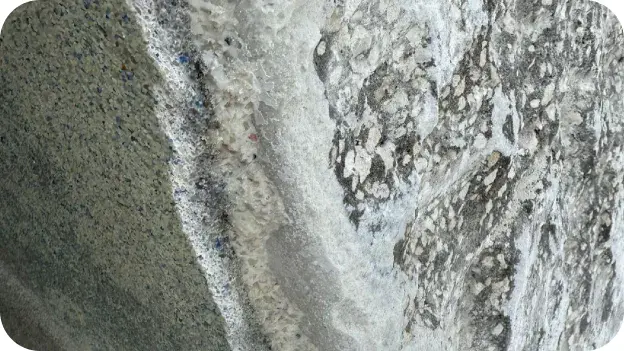
In pool remodeling, delamination refers to removing the existing pool interior finish (plaster, quartz, pebble, etc.) down to a solid, properly bonded surface before applying a new interior finish. Over time, pool interiors can detach from the structural shell due to age, improper original installation, hollow spots, moisture intrusion, chemical imbalance, or multiple previous resurfacing layers. If the existing interior is separating from the shell — or was never properly bonded in the first place — installing a new finish over it can compound the problem. Simply put: if the base layer is failing, adding another layer won’t fix it.
Why Delamination Is So Important
Structural integrity. The new pool interior is only as strong as what it’s bonded to. If the existing plaster is loose, hollow, or compromised, the new surface may crack, pop off, delaminate prematurely, or develop hollow spots — leading to costly repairs and frustration.
Warranty protection. Many pool interior manufacturers have strict installation requirements. If their product is applied over a failing or improperly prepared surface, it may void the warranty. Even when a bond coat (such as BondKote) is applied over the existing finish, manufacturers may still require removal of unsound material to maintain warranty coverage. Skipping full delamination can create gray areas when warranty claims arise.
Long-term value. A proper chip-out ensures better adhesion, a longer lifespan, reduced risk of callbacks, and greater resale confidence. For homeowners investing in a remodel, this is about doing it right the first time.
Two Common Methods of Delamination
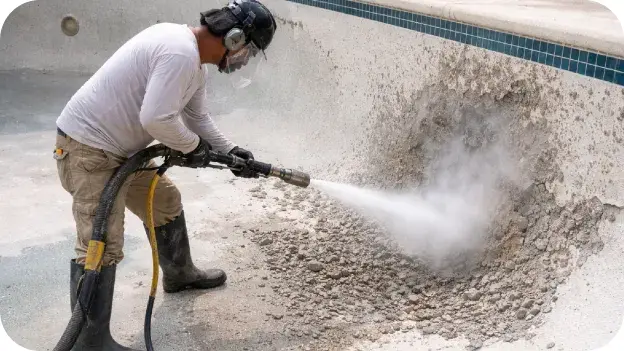
Hydro blasting (high-pressure water removal) uses ultra-high-pressure water — often 20,000+ PSI — to remove the existing interior. It offers more controlled removal, less vibration to the pool shell, and cleaner surface preparation, and is often preferred for structural preservation. It’s typically more expensive and requires specialized equipment.
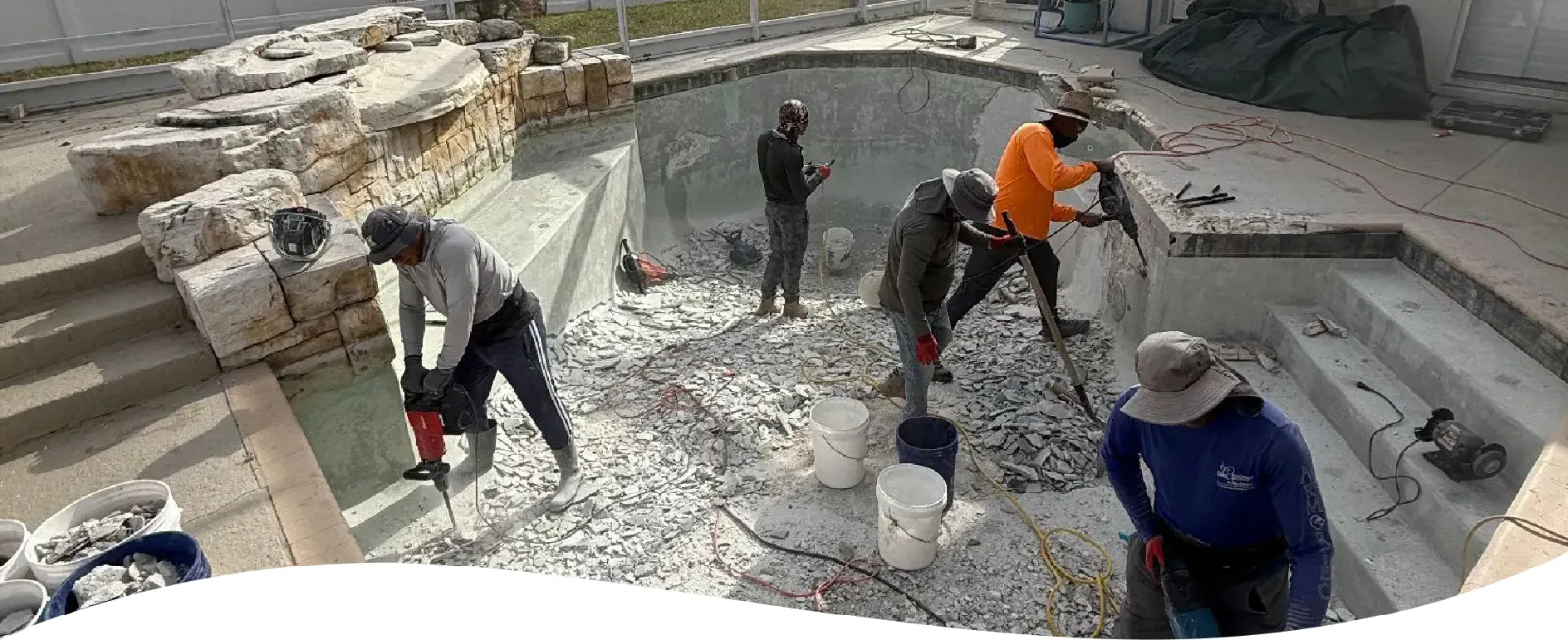
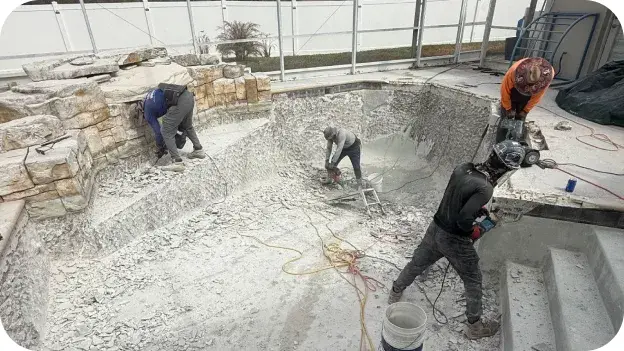
Mechanical chip-out (jack hammers) uses pneumatic or electric jack hammers to chip away the existing plaster. It’s common, widely used, and generally less expensive than hydro blasting, and effective when done properly — but it creates vibration, can potentially damage the shell if not done carefully, and may leave inconsistent surface prep if rushed. When performed by experienced crews, mechanical chip-outs can be completely acceptable; the key is thoroughness.
Is It Ever Acceptable to Plaster Over Existing Plaster?
Yes, but it comes with caveats. In some remodels, contractors may remove a few inches of plaster below the waterline tile, apply a bond coat over the existing interior, and install the new plaster so it curves slightly upward to meet the tile, making it appear flush once the pool is filled. Visually, it can look perfect once the pool is full of water. But concerns remain: you’re bonding to an existing layer whose integrity may be unknown, and if separation occurs between the original plaster and the shell, both layers can fail. Warranty limitations may apply, and multiple plaster layers add thickness and weight. This approach may reduce cost, but it carries more long-term risk.
Cost Considerations: Why Estimates Can Vary
Delamination adds labor, equipment, disposal, and time to a remodel — a proper full chip-out will increase the cost of a project. If you receive two resurfacing quotes and one is significantly cheaper, ask: is this a full chip-out? Will the existing plaster be completely removed? Is hydro blasting included? What does the manufacturer require for warranty compliance? An estimate that skips delamination can look appealing upfront, but may cost far more later if failure occurs.
The Bottom Line
A pool remodel is an investment. Delamination is not the glamorous part of the project, but it may be the most important. If the existing interior is compromised, installing a new finish over it is like painting over peeling drywall — it may look good temporarily, but it won’t last. When comparing contractors, review scopes carefully, ask about chip-out methods, clarify warranty requirements, and understand what you’re truly paying for. In pool remodeling, proper preparation determines performance — and when it comes to resurfacing, what’s underneath matters most.
References
This article draws on Pool Pros Construction's own published process and project pages, not third-party sources:
See it built
Ready to talk about your own pool?
Tell us about the space you have and the pool you're picturing — we'll take it from there.