
September 3, 2026
Alligators and Swimming Pools: What FWC Actually Does About It
There is a specific FWC rule for an alligator in your pool, and it is not the one the four-foot threshold implies. Who to call and what happens next.
By Pool Pros · September 3, 2026 · Homeowner Resources
Let’s deal with the realistic version of this rather than the dramatic one.
A chlorinated backyard pool is not alligator habitat. Alligators are not drawn across neighbourhoods by the smell of a swimming pool, and if you live in the middle of a built-up part of Clearwater or Brandon this is not something to spend an evening worrying about.
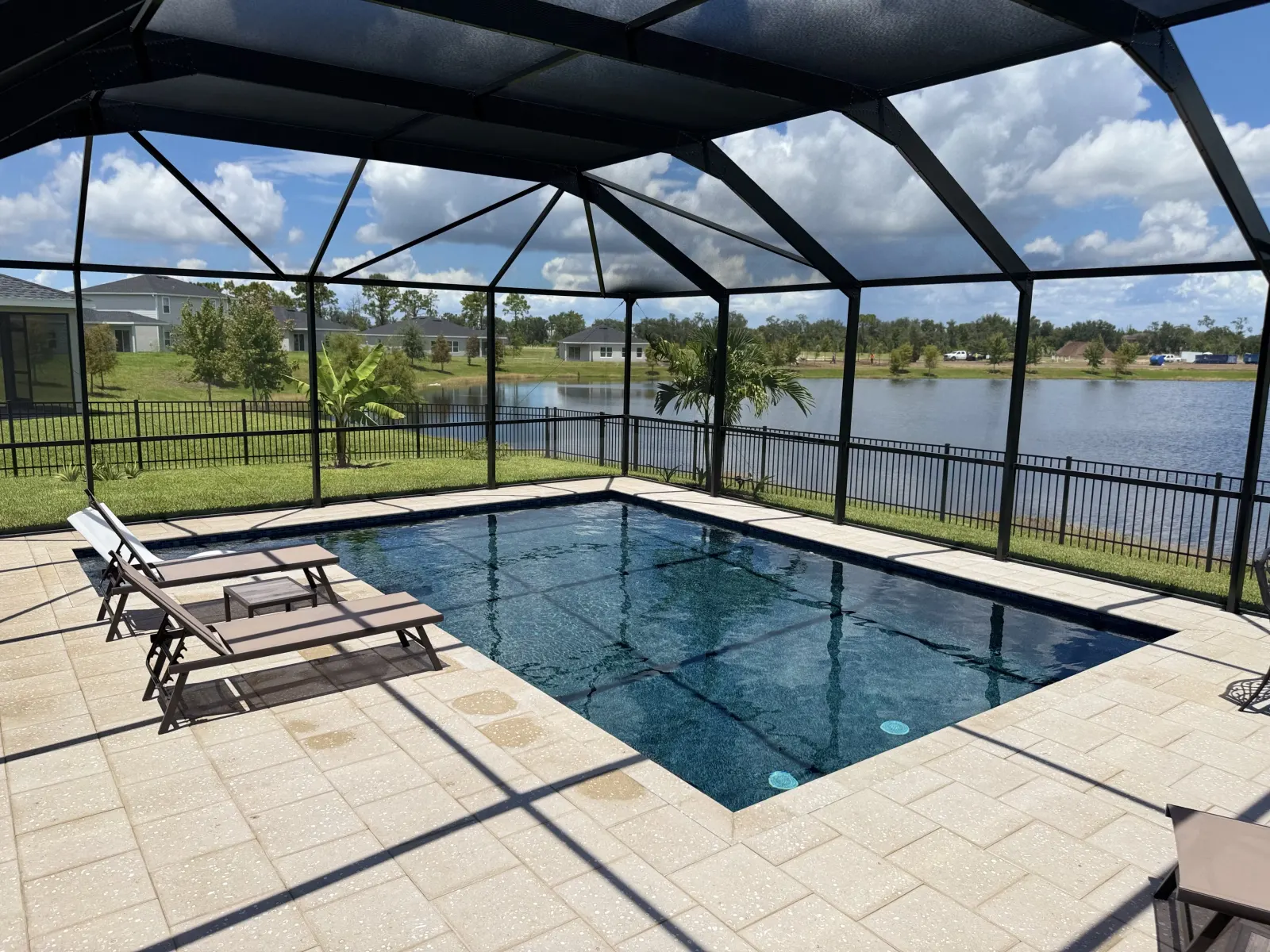
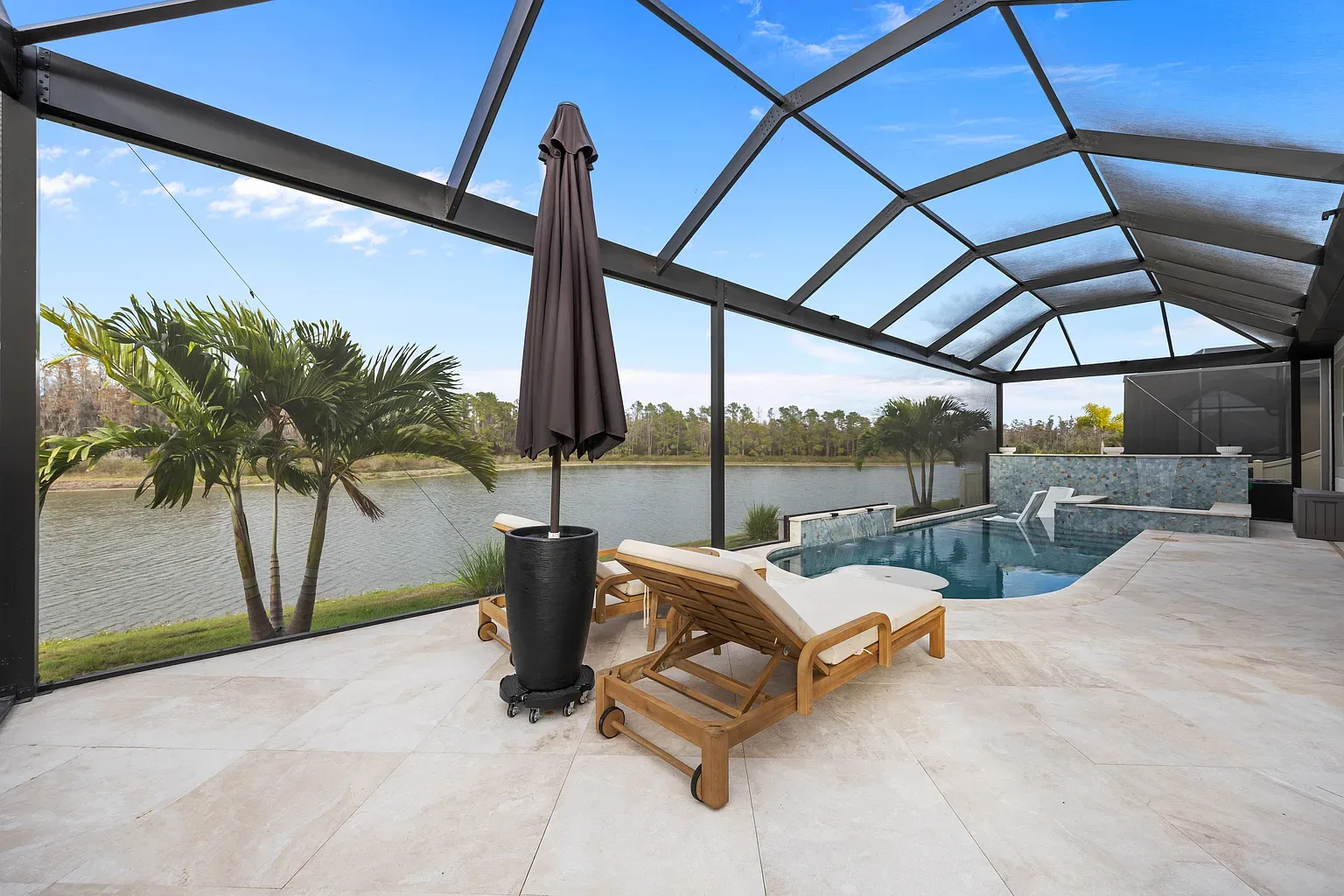
What matters is not the pool. It is what your lot backs onto. FWC notes that alligators live in all 67 Florida counties and inhabit ponds and retention areas in developed regions — which describes an enormous number of Tampa Bay backyards, because a retention pond is a standard feature of the subdivisions built here for the last forty years.
If there is fresh water within an easy walk of your deck, this article is for you.
The rule that contradicts itself, and how to read it
Homeowners who research this end up confused, and it is not their fault. FWC’s headline definition says:
an alligator may be considered a nuisance if it’s at least 4 feet in length and believed to pose a threat to people, pets or property
So people reasonably conclude that a three-foot alligator is not FWC’s problem and that they should sort it out themselves.
FWC’s own guidance says otherwise, and it names the exact situation:
If there’s an alligator under 4 feet in your swimming pool, on your porch or in a similar situation, call the Nuisance Alligator Hotline.
Both things are true. The four-foot threshold is the general test for a nuisance alligator out in the world. A pool or a porch is treated as its own case, because a small alligator in a place people are barefoot and children are unsupervised is a different situation from a small alligator in a lake.
The number is 866-FWC-GATOR (866-392-4286). FWC dispatches a contracted nuisance alligator trapper. It is not a call to your county, your HOA, or your pool company — none of whom can lawfully do anything about it.
And do not handle it yourself. FWC states plainly that it is illegal to handle alligators, even small ones.
The part nobody expects
If you are going to call, you should know what the call sets in motion.
The program does not relocate captured alligators. FWC gives two reasons: relocated alligators often try to return to their capture site, and releasing them into remote areas that already support alligators disrupts established social structures and can cause conflict between animals.
We mention this not to discourage anyone from calling about an alligator in their pool — that is exactly the situation the hotline exists for — but because people assume a trapper is a taxi service, and then feel misled afterwards. Knowing this in advance is also the best argument for not calling about every alligator you see sunning itself across the pond. That one is a neighbour. The one on your deck is a problem.
What FWC asks of you the rest of the time
The standing guidance is short and it is mostly about not making things worse:
- Never feed an alligator. FWC campaigns on this specifically. A fed alligator loses its wariness of people, and a bold alligator is the one that becomes a genuine danger and then has to be removed.
- Swim only in designated swimming areas, during daylight hours. This is about lakes and springs, not your pool.
- Keep pets on a leash and away from the water. Dogs at the edge of a retention pond are the single most common way this goes badly, and dogs do not understand the rule.
That last one is the practical one for pool owners on water-backed lots, and it is worth saying out loud to guests who are visiting from somewhere without alligators and who will happily let a small dog run to the water’s edge.
What a builder can actually do about it
Honestly, not much — and we would rather say so than sell you something.
Siting helps a little. Where the deck, the gates and the equipment pad sit relative to a pond edge is worth a thought at design stage on a water-backed lot, mostly so that the route from water to deck isn’t the most obvious path across the yard.
A screen enclosure is a real physical barrier, and on a lot backing onto a pond or canal it is one of the more practical reasons to have one, alongside the insects and the leaves. It is not an alligator barrier by design — cages are engineered for wind loads, not animals — but a closed cage is meaningfully harder to walk into than an open deck.
A pool safety barrier is not an alligator barrier, and vice versa. They solve different problems and they are specified against different requirements. If you want both, say so early; the requirements for the safety barrier are the stricter and less negotiable of the two, and we cover them in Florida’s pool barrier law.
The proportionate summary
Most Tampa Bay pool owners will never see an alligator on their deck. Those on lots backing onto lakes, canals and retention ponds occasionally will, and the correct response is a phone number rather than a broom.
Save the number now: 866-392-4286. Keep the dog on a lead near the pond. Don’t feed anything. That is genuinely the whole protocol.
This article summarises FWC guidance as published on 17 August 2026. FWC is the authority on alligator management in Florida; follow their current guidance over any summary, including this one.
References
Sources cited in this article:
Ready to talk about your own pool?
Tell us about the space you have and the pool you're picturing — we'll take it from there.