
October 7, 2026
Does a Screen Enclosure Keep Alligators Out?
A screen enclosure is insect screen on an aluminum frame, built for wind, not wildlife. What FWC and UF/IFAS say actually keeps alligators off a pool deck.
By Pool Pros (CPC1461047) · October 7, 2026 · Pool Features
Not reliably. Florida's building code defines a screen enclosure by its walls of insect screening, and the frame is designed around wind load, not animals. A closed, intact enclosure is still an obstacle. FWC and UF/IFAS point to what helps more: never feeding alligators, keeping pets away from the water and fencing taller than 4.5 feet.
A screen enclosure looks like a wall between a pool deck and whatever lives in the pond behind it. Against mosquitoes and no-see-ums, that is roughly what it is. Against an alligator, the rules and the materials say something more modest.
What is a pool screen enclosure built to stop?
A pool screen enclosure is built to stop insects and to stand up to wind. The Florida Building Code, Building, Section 202 defines a screen enclosure as a building “having walls of insect screening,” with a roof of insect screening, plastic, aluminum or similar lightweight material. Nothing in that definition mentions animals.
Screen maker Phifer describes its products the same way. Phifer’s catalog calls its 18x14 Pool & Patio Screen a traditional choice for pool enclosures, designed for applications where extra strength is desired, and its 20x20 No-See-Um Screen a tightly woven mesh designed to control small insects. Phifer sells a different product, PetScreen, described as tear- and puncture-resistant to resist damage by most dogs and cats.
The aluminum frame is engineered around wind. A full-scale wind test report prepared for the Florida Building Commission notes that the code does not require screens or screen attachments to meet the design wind speed. The Pool Pros article on pool cage wind ratings explains how that shapes a cage’s design.
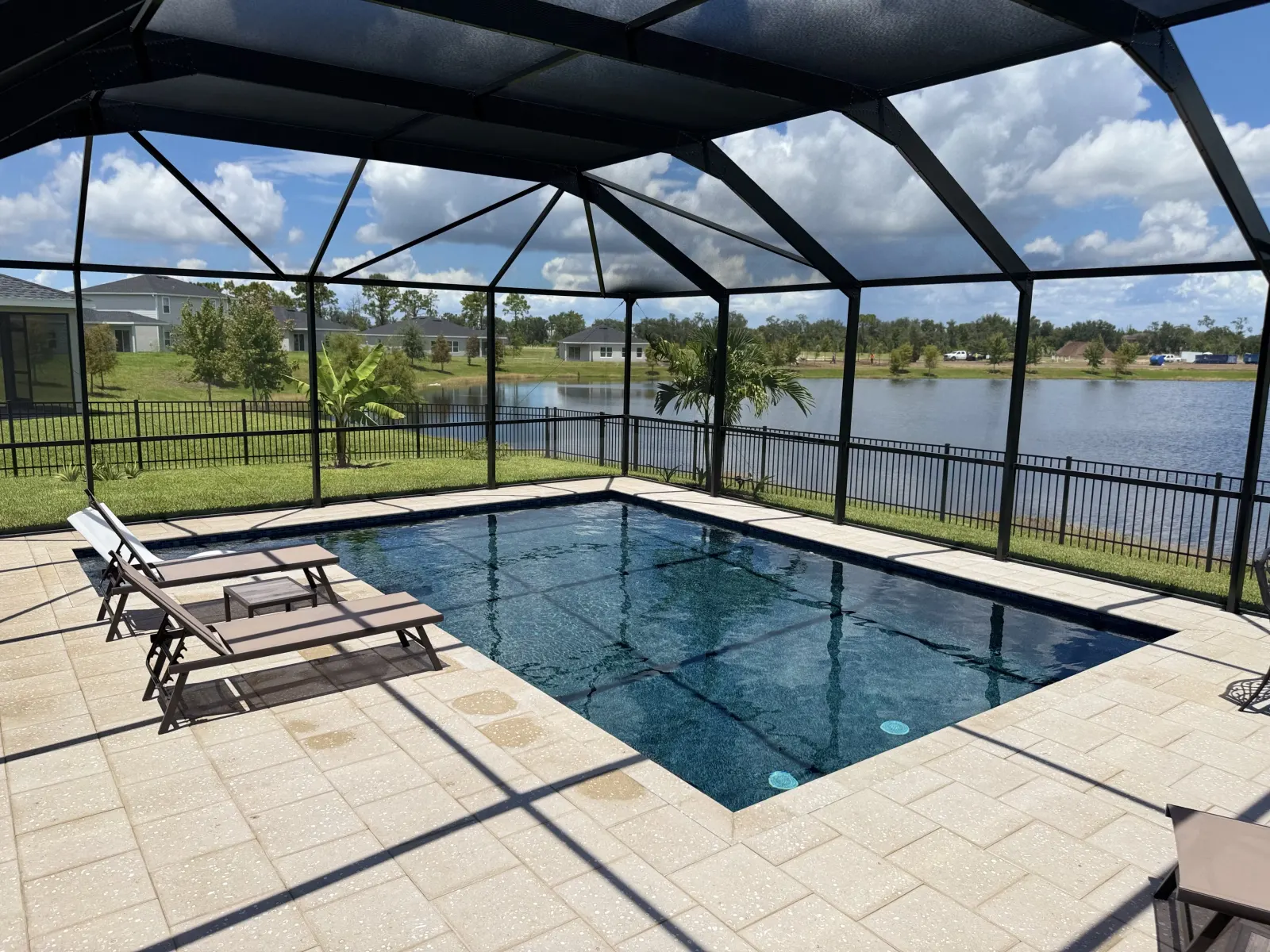
Pool Pros’ Hillwood Preserve build in Bradenton is a typical modern example: a bronze aluminum screen enclosure with two standard doors, two downspouts and upgraded Super Screen no-see-um mesh. An enclosure like that keeps the smallest biting insects off the deck. Nothing in that description, or in the code’s definition, presents it as an alligator fence.
Why isn’t a pool safety barrier an alligator barrier either?
Florida’s pool barrier law measures everything against a young child, not an animal. Section 515.23 of the Florida Statutes states the Legislature’s finding that drowning is the leading cause of death of young children in the state, and the law’s intent that every new residential pool have at least one safety feature to deny, delay or detect unsupervised entry. Section 515.25 defines a young child as anyone under 6.
Section 515.29 then sets the barrier’s physical requirements. The barrier must be at least 4 feet high on the outside, with no gaps, openings or structural components that could let a young child crawl under, squeeze through or climb over it. Gates must open outward, self-close and self-latch. The Florida pool barrier law article covers those rules in full.
How tall does a fence need to be to keep alligators out?
A fence meant to keep alligators out of a yard should be more than 4.5 feet tall, according to UF/IFAS Extension’s publication Living with Alligators: A Florida Reality. The same publication says young alligators are agile climbers and adults have been known to climb fences.
| Structure | Written to stop | Height | Source |
|---|---|---|---|
| Screen enclosure | Insects, while carrying wind load | None in its definition | Florida Building Code, Section 202 |
| Pool safety barrier | A child under 6 | At least 4 feet | Section 515.29, Florida Statutes |
| Fence against alligators | Alligators entering a yard | More than 4.5 feet | UF/IFAS Extension, WEC203 |
A barrier built to the statute’s minimum height is shorter than the fence UF/IFAS describes. The Florida Building Code, Section 2002.7, contemplates screen enclosures that serve as the pool barrier, and a cage that does still answers to the child-safety rules. Meeting them does not make it an alligator fence.
What does FWC say about alligators near pools and ponds?
FWC’s alligator brochure estimates Florida’s population at 1.3 million alligators, found in all 67 counties, and notes that residents seeking waterfront homes see more frequent encounters. UF/IFAS Extension adds that alligators may turn up anywhere there is water, including lakes, ponds and man-made canals.
Timing matters too. FWC says alligators are most active between dusk and dawn, and UF/IFAS Extension puts mating season from mid-April through May. FWC’s Statewide Nuisance Alligator Program handles alligators that threaten people, pets or property, and it asks for a call about an alligator in a swimming pool or on a porch even when the animal is under 4 feet. The Pool Pros article on alligators and swimming pools walks through what that program does after the call.
What actually keeps alligators off a pool deck?
Keeping alligators off a pool deck comes down to habits FWC and UF/IFAS already recommend, plus keeping the enclosure you have in working order:
- Keep enclosure doors closed, and be strictest about it from dusk to dawn, when FWC says alligators are most active.
- Repair torn screen and loose panels promptly. A storm-damaged cage is open on every side it lost screen; the guide to rescreening a pool cage after a storm covers checking the frame first.
- Never feed an alligator. FWC calls it illegal and dangerous, and says fed alligators can lose their natural wariness and learn to associate people with food.
- Keep pets on a leash and away from the water’s edge. FWC notes that pets often resemble alligators’ natural prey.
- Go taller than 4.5 feet if you fence against alligators. That is UF/IFAS Extension’s figure for keeping alligators out of a yard.
- Report a threatening alligator to FWC’s Statewide Nuisance Alligator Program.
Is a screen enclosure still worth having on a pond lot?
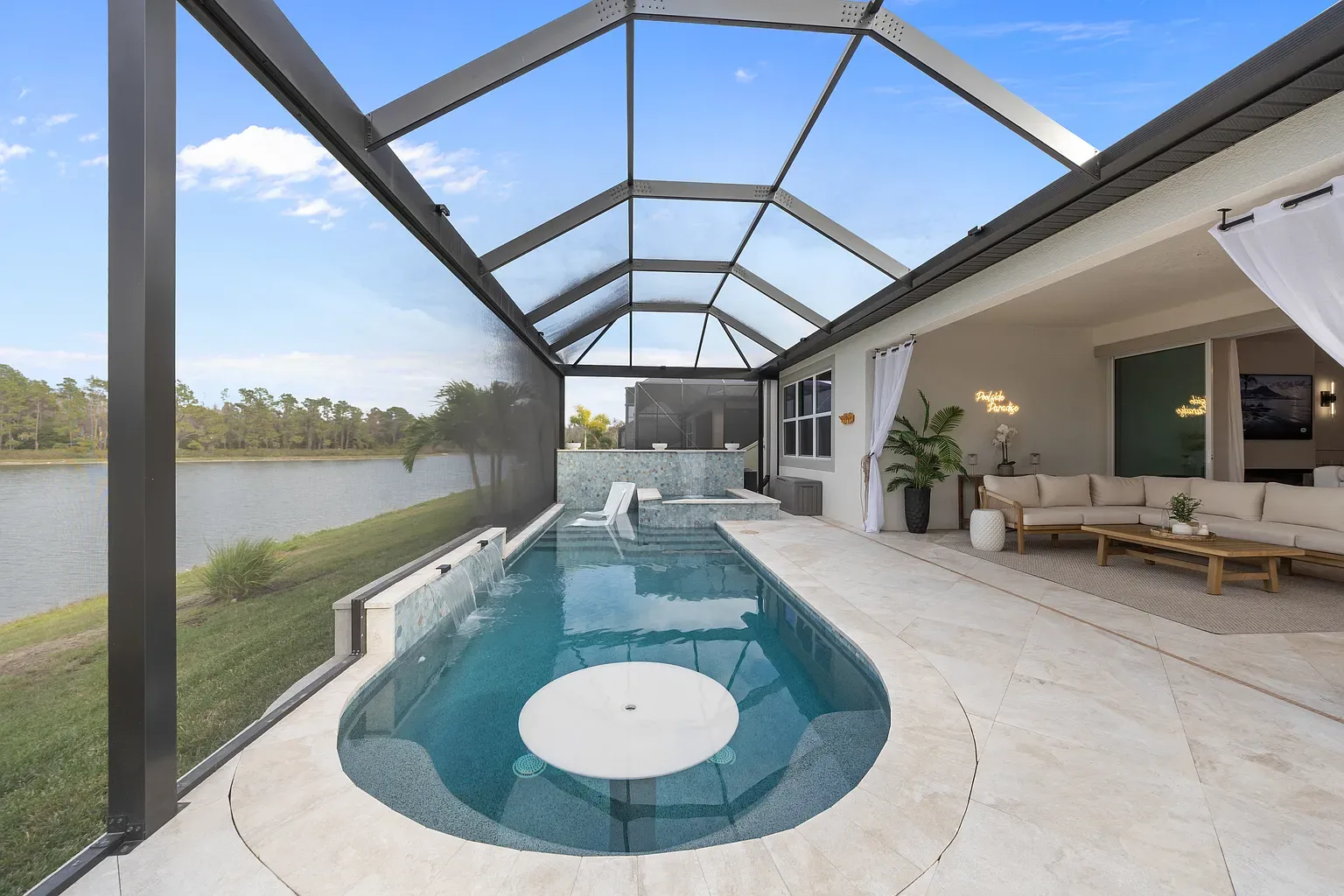
A screen enclosure still earns its place on a pond lot, for the reasons it was designed around. Pool Pros Construction builds pools in Pasco, Hillsborough, Pinellas and Manatee counties, and the Bradenton and Lake Jovita enclosures on Pool Pros projects both use no-see-um screening, the fine mesh Phifer describes as designed to control small insects. The screen enclosures on Pool Pros builds page describes those cages.
A closed, intact cage is an obstacle between the pond and the deck. The measures FWC and UF/IFAS actually name are simpler: no food, pets kept back from the water, a fence taller than 4.5 feet where one is warranted and a call to the nuisance program when an animal becomes a threat.
References
Sources cited in this article:
- UpCodes: 2023 Florida Building Code, Building, 8th ed., Section 202 definition of Screen Enclosure (retrieved September 14, 2026)
- Florida Building Commission: Full Scale Wind Load Testing of Aluminum Screen Enclosures, Final Report, June 30, 2014 (retrieved September 14, 2026)
- Phifer: Pool and Patio Insect Screening catalog sheet, 18x14 Pool & Patio and 20x20 No-See-Um (retrieved September 14, 2026)
- Phifer: PetScreen, Dog and Cat Resistant Screening (retrieved September 14, 2026)
- Online Sunshine, 2026 Florida Statutes: Section 515.23, Legislative findings and intent (retrieved September 14, 2026)
- Online Sunshine, 2026 Florida Statutes: Section 515.25, Definitions (retrieved September 14, 2026)
- Online Sunshine, 2026 Florida Statutes: Section 515.29, Residential swimming pool barrier requirements (retrieved September 14, 2026)
- UF/IFAS Extension EDIS WEC203/UW230: Living with Alligators: A Florida Reality (retrieved September 14, 2026)
- FWC: A Guide to Living with Alligators brochure (retrieved September 14, 2026)
- FWC: Statewide Nuisance Alligator Program (SNAP) (retrieved September 14, 2026)
- FWC: Tips to safely co-exist with alligators, news release, March 25, 2025 (retrieved September 14, 2026)
- FWC: Tips to safely co-exist with alligators, news release, March 13, 2023 (retrieved September 14, 2026)
- UpCodes: 2023 Florida Building Code, Building, 8th ed., Section 2002.7 Alternative Design Method for Screen Enclosure (retrieved September 14, 2026)
Ready to talk about your own pool?
Tell us about the space you have and the pool you're picturing — we'll take it from there.