
October 31, 2026
Teaching a Florida Child to Be Safe Around Water
What reduces a young child's drowning risk in Florida: when AAP says swim lessons can start, what a Water Watcher does, and the barriers that back them up.
By Pool Pros (CPC1461047) · October 31, 2026 · Homeowner Resources
Water safety for a young child works in layers, not one lesson. The Florida Department of Health puts supervision first, then barriers and alarms, then preparedness such as CPR. The American Academy of Pediatrics says swim lessons can begin for many children at age 1, but lessons never make a child drown-proof, so constant supervision stays essential.
No child is drown-proof, and no single lesson, float or device changes that. What lowers the risk is a stack of habits and hardware, each one covering the moment another fails. Some layers are things a child can learn. More of them are jobs for the adults and the house.
Why does water safety start early in Florida?
The Florida Department of Health states that drowning is the leading cause of unintentional death for Florida children ages 1 to 4. The department also says home swimming pools are where most children are likely to drown, and its water safety brochure adds that drowning deaths of children age 4 and younger most often happen in pools, lakes or retention ponds, usually during non-swim time, when nobody is swimming at all.
The national picture matches. The U.S. Consumer Product Safety Commission’s June 2026 report release states that drowning is the leading cause of death for children ages one to four.
When should a child start swim lessons?
The American Academy of Pediatrics (AAP) says swim lessons can begin for many children starting at age 1, while noting that children develop at different rates. AAP’s guidance sets out a rough timeline:
- Under age 1. AAP does not recommend infant swim programs, because there is currently no evidence they lower drowning risk. A parent-child water play class is fine for getting a baby used to the pool.
- Ages 1 to 4. AAP says studies suggest water competency and survival skills training can help reduce drowning risk at these ages, and parent-child classes can build habits such as back floating.
- By the fourth birthday. Most children are ready for lessons and can learn skills such as treading water and getting to an exit point.
- Ages 5 to 6. Most children in lessons can master the front crawl.
AAP is direct about the limit: swim lessons don’t make kids “drown proof.” Its revised policy statement, published in the July 2026 issue of Pediatrics, keeps lessons as one layer alongside supervision, life jackets, fencing laws and CPR.
What should a good swim program teach?
AAP’s checklist looks past stroke technique to broader water survival skills. Every child should learn to get back to the surface from underwater, propel themselves at least 25 yards and get out of the water. The Florida Department of Health’s definition of water competency is similar: entering water safely, floating or treading water, swimming a distance and exiting safely.
Look for a program that:
- Uses instructors certified through a nationally recognized learn-to-swim curriculum, with lifeguards holding current CPR and first aid certification.
- Teaches children never to swim alone and to ask permission before getting into any pool or lake.
- Practices what to do after an unexpected fall in, including swimming in clothes.
- Runs multiple sessions and shows steady progress.
- For children under 4, keeps an adult within arm’s reach for “touch supervision.”
What does a Water Watcher actually do?
A Water Watcher is the adult assigned to watch the water and do nothing else. The Florida Department of Health’s Water Watcher tag spells out the job:
- Constantly watch children in or near the water, keeping them in sight at all times.
- Regularly scan the top and bottom of the water.
- No conversations, books, headphones or cell phones.
- Before leaving, assign another responsible adult to take over.
The same tag says a Water Watcher is not a certified lifeguard and is not trained to perform emergency rescues. AAP suggests passing a Water Watcher card to the next responsible adult every 15 to 20 minutes at parties, when distraction is easiest. For infants, toddlers and children in or near water, the department’s brochure says an adult should always be within arm’s length.
What can’t a young child be taught?
Curiosity is not something a toddler can be taught out of. AAP says the leading drowning risk for toddlers ages 1 to 4 is unexpected, unsupervised access to water, and that curious children commonly slip away unnoticed during non-swim time. The Florida Department of Health’s brochure adds that flotation devices, water wings and foam toys are not a substitute for active supervision.
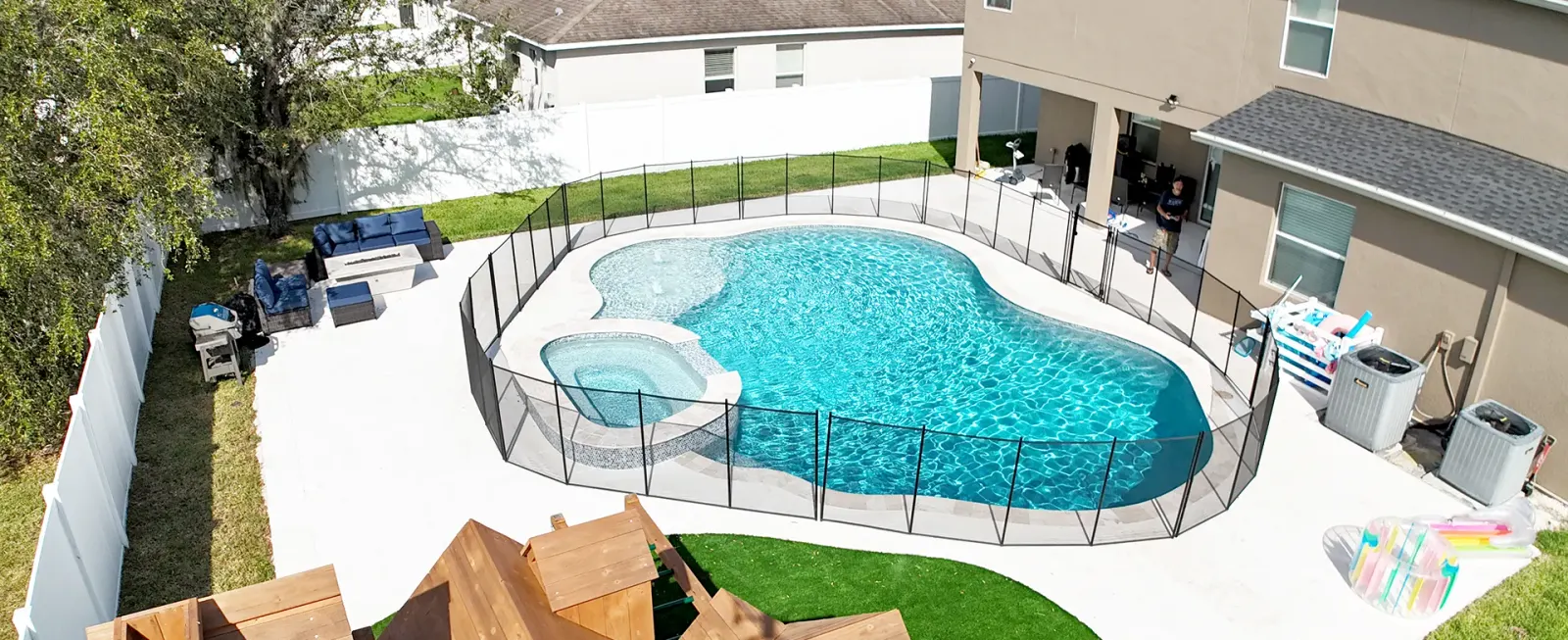
The department’s layers of protection page answers the gap with barriers: gates, fences, walls, doors and windows that physically block a child from the pool, plus safety covers and alarms.
Florida’s section 515.27 requires a new residential pool to meet at least one of five listed safety features to pass final inspection. Pool Pros has written up each piece: the statute in Florida’s pool barrier law explained, the trade-offs in pool alarms, safety covers and door alarms compared, and the case for fencing all four sides in the four-sided isolation fence comparison.
Why should parents learn CPR?
The Florida Department of Health’s third layer is preparedness: a phone nearby to call 911, and CPR with breaths plus first aid. AAP’s revised recommendations say caregivers and adolescents should learn CPR and know how to perform a safe rescue. The department’s brochure notes that the American Red Cross and the American Heart Association offer CPR courses online and in person.
How can Florida families get free swim lessons?
The Florida Department of Health’s Swimming Lesson Voucher Program provides free swimming lessons to eligible families until funding runs out. The department lists these requirements:
- Proof of Florida residency.
- Gross family income of no more than 200 percent of the federal poverty guidelines.
- A child ages 1 to 7 at the time of application.
- Lessons that begin within 180 days of the voucher being issued.
Where does a pool builder like Pool Pros fit in?
A pool builder’s part is the layer a child cannot be taught around: the barrier, cover or alarm between the back door and the water. Florida’s section 515.33 requires a licensed pool contractor to give the buyer the chapter 515 requirements and the Department of Health’s drowning prevention publication when the agreement to build is made.
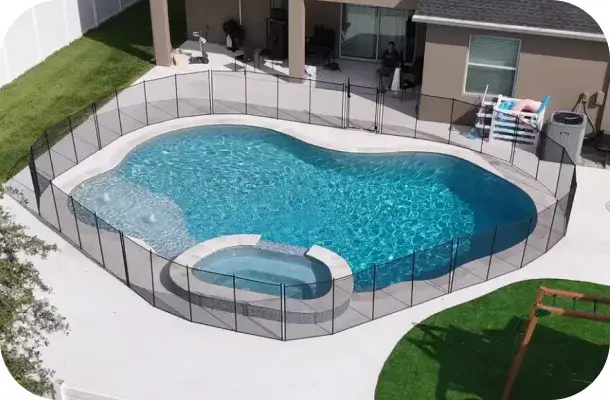
Pool Pros Construction treats barrier compliance as a design-stage decision, settled early in the Pool Pros build process, so the barrier fits the family that will use the pool. Where young children live or visit, Pool Pros recommends an isolation fence around the pool.
References
Sources cited in this article:
- Florida Department of Health: Drowning Prevention (retrieved September 14, 2026)
- Florida Department of Health: Layers of Protection (retrieved September 14, 2026)
- Florida Department of Health: Water Safety for Your Child brochure (retrieved September 14, 2026)
- Florida Department of Health: Water Watcher Tags (retrieved September 14, 2026)
- Florida Department of Health: Swimming Lesson Vouchers (retrieved September 14, 2026)
- American Academy of Pediatrics, HealthyChildren.org: Swim Lessons for Children, When to Start and What to Consider, updated May 18, 2026 (retrieved September 14, 2026)
- American Academy of Pediatrics, HealthyChildren.org: AAP Releases Updated Drowning Prevention Recommendations (retrieved September 14, 2026)
- U.S. Consumer Product Safety Commission: CPSC Report Highlights Persistent Risk of Childhood Drowning, June 24, 2026 (retrieved September 14, 2026)
- The Florida Legislature: 2026 Florida Statutes, Chapter 515, Residential Swimming Pool Safety Act (retrieved September 14, 2026)
Ready to talk about your own pool?
Tell us about the space you have and the pool you're picturing — we'll take it from there.