
October 23, 2026
Snakes Around the Pool Deck: Which Florida Species Matter
Snakes around the pool deck in Tampa Bay: which four venomous species live here, which common snakes are harmless lookalikes, and what FWC and UF/IFAS advise.
By Pool Pros (CPC1461047) · October 23, 2026 · Homeowner Resources
Four of Florida's six venomous snakes live around Tampa Bay: the cottonmouth, eastern diamondback rattlesnake, pygmy rattlesnake and coral snake. Copperheads and timber rattlesnakes do not range this far south. Racers and watersnakes, the snakes most often seen near homes and water, are harmless, and FWC and UF/IFAS advise leaving every snake alone.
A snake on the pool deck gets the same reaction almost everywhere in Florida. Before anyone reaches for a shovel, it helps to know which species actually live around Tampa Bay, and how often the snake in front of you is a harmless one.
Which venomous snakes live around Tampa Bay?
Four venomous snakes live around Tampa Bay. FWC counts 50 native snake species in Florida, six of them venomous: the eastern coral snake, southern copperhead, cottonmouth, eastern diamondback rattlesnake, timber rattlesnake and dusky pygmy rattlesnake. Two of the six stay far to the north and west of Pasco, Hillsborough, Pinellas and Manatee counties.
| Species | Florida range, per the Florida Museum of Natural History | Around Tampa Bay? |
|---|---|---|
| Cottonmouth | Throughout Florida and in every county | Yes |
| Eastern diamondback rattlesnake | Throughout Florida and in every county | Yes |
| Pygmy rattlesnake | Throughout Florida and in every county | Yes |
| Harlequin coralsnake | Throughout Florida and in every county | Yes |
| Timber rattlesnake | 12 northern Florida counties | No |
| Eastern copperhead | Seven Panhandle counties | No |
UF/IFAS Extension’s guide to venomous snakes agrees: copperheads occur only in a small area west of Tallahassee and a few western Panhandle counties, and timber rattlesnakes are usually found only as far south as Gainesville, with a few known a little farther south.
Which of the venomous four turn up near homes?
UF/IFAS Extension calls the pygmy rattlesnake one of the most commonly encountered venomous snakes, occasionally found in residential neighborhoods. Adults rarely exceed 20 inches. The Florida Museum of Natural History says its bites are painful but generally not life-threatening to people or pets, though they can be more serious for children and small pets.
The other three have their own habits:
- Cottonmouth: found near almost any water, from ponds and canals to retention pools and roadside ditches, according to the museum. Its bite can be very dangerous.
- Eastern diamondback rattlesnake: UF/IFAS lists dry habitats including pinelands, scrub and golf courses, and the museum notes it shelters in palmetto thickets and gopher tortoise burrows.
- Coral snake: extremely secretive and rarely seen, usually under debris or in the ground, and occasionally found in suburban neighborhoods.
The museum’s advice for any venomous snakebite is immediate medical care from a physician or hospital experienced in treating snakebites. For the coral snake, it adds that virtually all bites occur when the snakes are intentionally molested.
Which harmless snakes do people find by the pool?
The snake crossing a Tampa Bay pool deck in daylight is often a harmless one. The Florida Museum of Natural History calls the North American racer, including the southern black racer, one of the snakes most commonly seen by Floridians, frequently seen in residential areas during the daytime and found in every mainland county.
Near water, watersnakes are the usual find. The museum lists the southern watersnake and brown watersnake in every mainland county. Southern watersnakes live around ponds, marshes and ditches and eat mostly frogs and fish; brown watersnakes eat almost only fish.
The scarlet kingsnake, found in every county, is a harmless lookalike for the coral snake. UF/IFAS Extension names it and the scarlet snake as two harmless species that look very similar to coral snakes.
Is it a watersnake or a cottonmouth?
A snake in or near water in Florida is most likely a harmless watersnake, according to the Florida Museum of Natural History. The museum counts eight nonvenomous watersnake species in Florida that overlap with cottonmouths and resemble them, and says many watersnakes are killed every year by people who mistake them for cottonmouths.
The museum lists three differences. Viewed from directly above, a cottonmouth’s eyes cannot be seen, while a watersnake’s can. Cottonmouths have cat-like vertical pupils, and a facial pit between nostril and eye; watersnakes have round pupils and no pit.
UF/IFAS Extension adds a warning: those features are hard to see without a close look, so do not rely on them, and a triangular head does not mean a snake is venomous. Watersnakes are not venomous but tend to be quick to bite. The safe identification is from a distance.
What draws snakes to a pool area?
Snakes come to a pool area for food and cover. The museum’s diet notes read like a list of what gathers around water and lawns: racers eat mostly frogs, lizards and small snakes in Florida, pygmy rattlesnakes take frogs, lizards and small mammals, and diamondbacks hunt rabbits, cotton rats, mice and squirrels.
A pool that breeds frogs is serving snake food, which is one more reason the Pool Pros article on frogs in the pool matters beyond the skimmer basket. Diamondbacks also shelter in gopher tortoise burrows, according to the museum, and the Pool Pros guide to gopher tortoise burrows and pool permits covers what a burrow means for a build.
FWC points at the cover side: removing brush, lumber and other debris discourages both rodents and snakes, and spilled bird seed and pet food should be cleaned up because they feed rodents.
What do FWC and UF/IFAS advise doing about a snake by the pool?
FWC’s first advice is to stand back and watch: snakes would rather avoid people and usually flee. The rest comes from FWC and UF/IFAS Extension:
- Leave it alone. UF/IFAS advises against trying to capture, harass or harm any snake, and says people who try to handle, harm or kill snakes are the most likely snakebite victims.
- Remove cover. Clear brush piles, lumber and debris, per FWC.
- Keep grass short. UF/IFAS says snakes avoid open ground because hawks and other raptors hunt it.
- Cut off the rodent supply. Clean up spilled bird seed and pet food, per FWC.
- Skip the repellents. UF/IFAS does not recommend chemical snake repellents because they have not been proven effective.
- Get medical care for any bite from a venomous species right away.
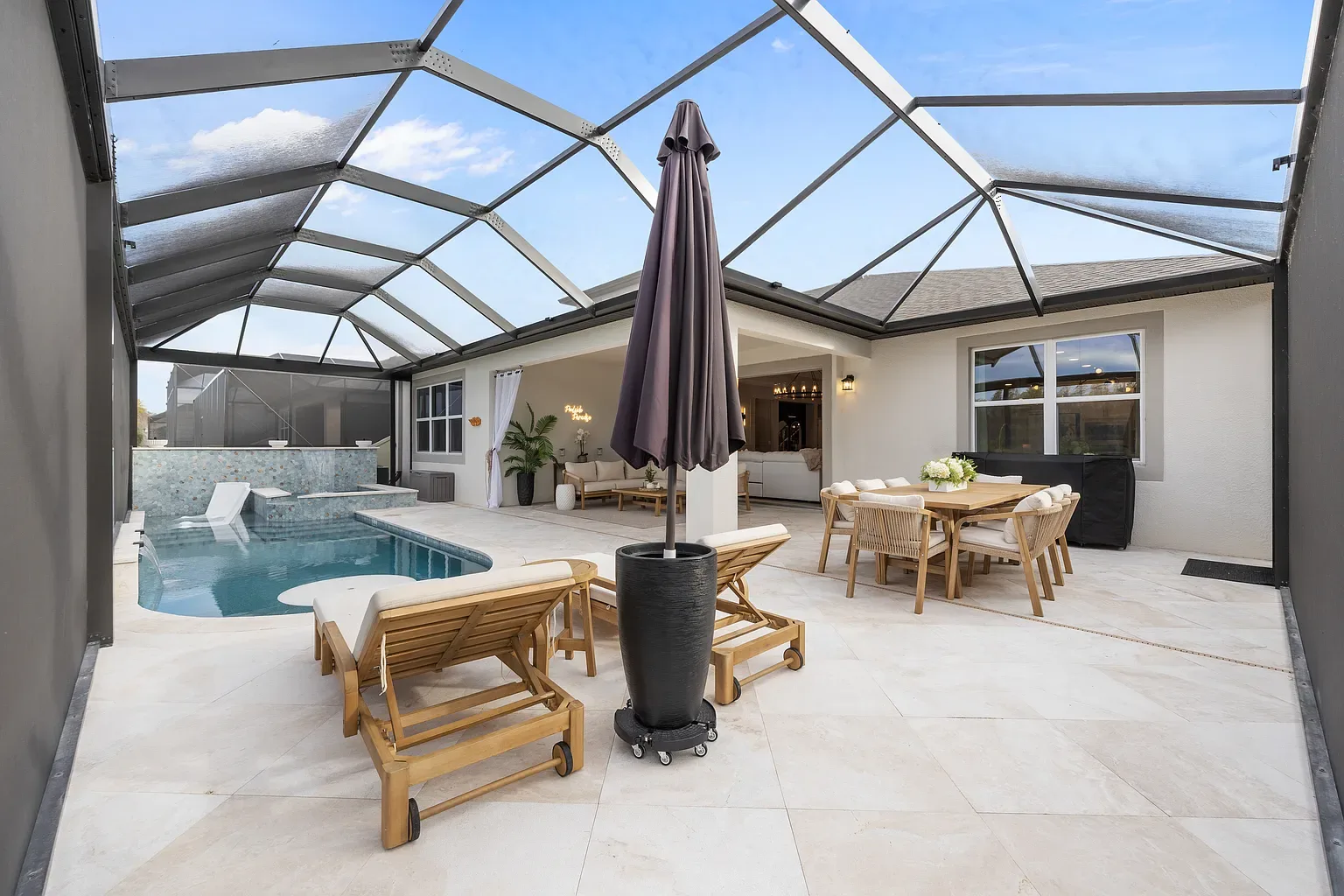
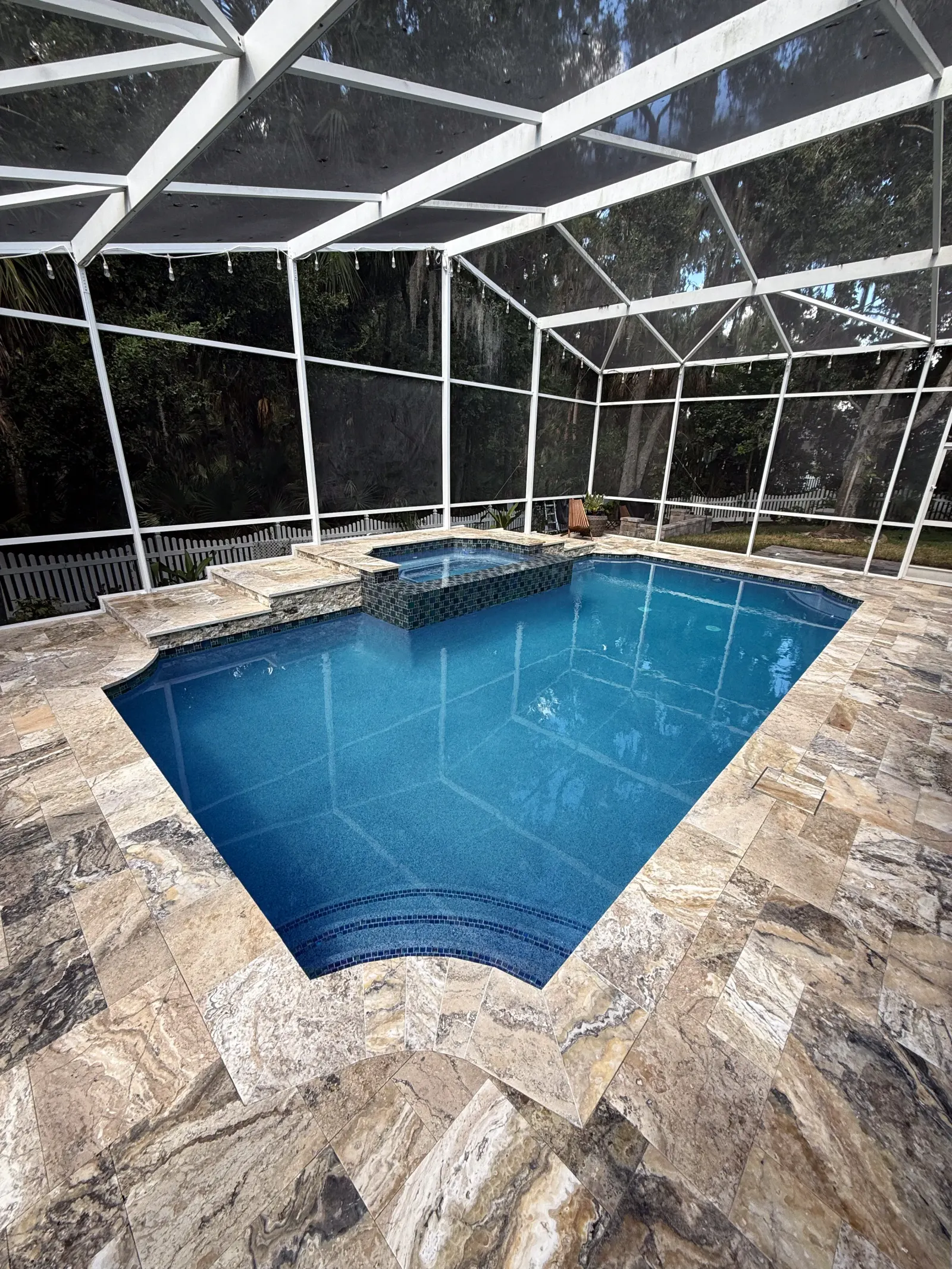
A screen enclosure is an obstacle only while its doors stay shut and its screen is whole, and the Florida Building Code defines one by its walls of insect screening, not as a wildlife barrier. The Pool Pros article on whether a screen enclosure keeps alligators out covers that limit, and the one on alligators and swimming pools covers the larger animal on the same pond edge.
Pool Pros builds pools across Pasco, Hillsborough, Pinellas and Manatee counties, and the screen enclosures on Pool Pros builds page describes the cages this advice applies to.
References
Sources cited in this article:
- FWC: Living with Snakes (retrieved September 14, 2026)
- UF/IFAS Extension EDIS WEC 202/UW229: Recognizing Florida's Venomous Snakes (retrieved September 14, 2026)
- UF/IFAS Extension EDIS WEC 201/UW227: Preventing Encounters between Children and Snakes (retrieved September 14, 2026)
- Florida Museum of Natural History, Florida Snake ID Guide: Florida Cottonmouth (retrieved September 14, 2026)
- Florida Museum of Natural History, Florida Snake ID Guide: Eastern Diamond-backed Rattlesnake (retrieved September 14, 2026)
- Florida Museum of Natural History, Florida Snake ID Guide: Pygmy Rattlesnake (retrieved September 14, 2026)
- Florida Museum of Natural History, Florida Snake ID Guide: Harlequin Coralsnake (retrieved September 14, 2026)
- Florida Museum of Natural History, Florida Snake ID Guide: Timber Rattlesnake (retrieved September 14, 2026)
- Florida Museum of Natural History, Florida Snake ID Guide: Eastern Copperhead (retrieved September 14, 2026)
- Florida Museum of Natural History, Florida Snake ID Guide: North American Racer (retrieved September 14, 2026)
- Florida Museum of Natural History, Florida Snake ID Guide: Southern Watersnake (retrieved September 14, 2026)
- Florida Museum of Natural History, Florida Snake ID Guide: Brown Watersnake (retrieved September 14, 2026)
- Florida Museum of Natural History, Florida Snake ID Guide: Scarlet Kingsnake (retrieved September 14, 2026)
- UpCodes: 2023 Florida Building Code, Building, 8th ed., Section 202 definition of Screen Enclosure (retrieved September 14, 2026)
Ready to talk about your own pool?
Tell us about the space you have and the pool you're picturing — we'll take it from there.